Blog
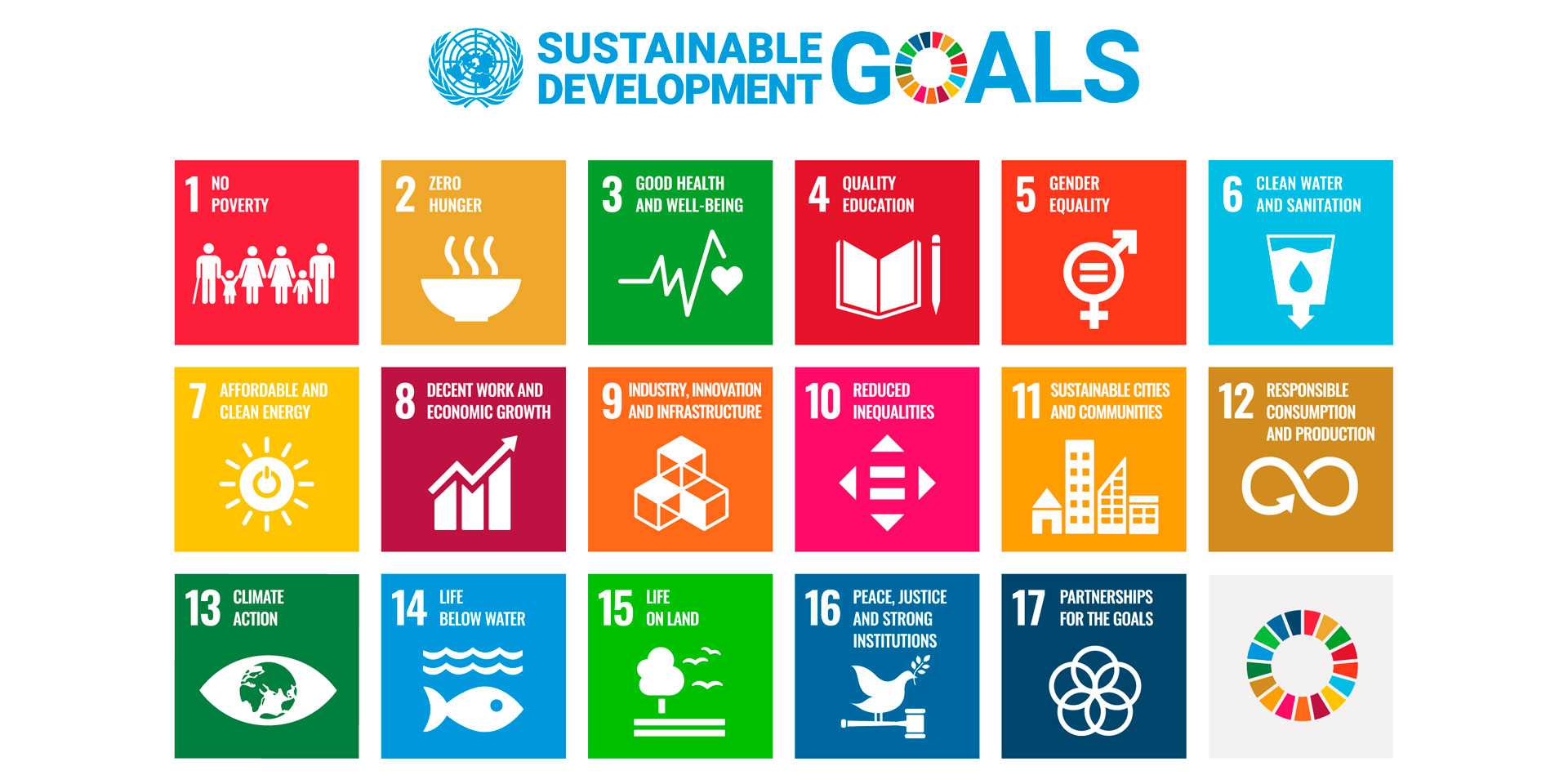
What are the 17 Sustainable Development Goals?
At We Take Part, this framework is neither a label nor a marketing argument: it is a transparency framework. For every project presented on our platform, we clearly indicate which SDGs the startup contributes to, based on verifiable and documented evidence. The objective is to enable each investor to access structured, understandable information.
Why SDGs have become a common language of impact
The success of the SDGs is based on three key elements:
A primary, global source The SDGs come directly from the United Nations (sdgs.un.org), making them a universal, neutral, and internationally recognized reference.
A systemic approach The 17 goals cover the full range of challenges: climate, biodiversity, energy, water, industry, cities, health, equality, and governance.
Precise targets and indicators Each SDG is accompanied by sub-targets and metrics enabling global monitoring (Sustainable Development Goals Report, UN).
This combination makes the SDGs a credible tool for analyzing the real impact of a project—whether it is a public policy, a development program, or a cleantech startup.
The 17 SDGs at a glance
Below is an innovation- and sustainable finance–oriented reading, aligned with the projects we support.
SDGs 2, 6, 7, 9, 11, 12, 13: the core of cleantech innovation
These are the SDGs most frequently found in We Take Part projects:
SDG 2 – Zero Hunger: agritech, food sovereignty, regenerative agriculture
SDG 6 – Clean Water: purification technologies, circular water economy
SDG 7 – Clean Energy: solar, green hydrogen, storage, grid flexibility
SDG 9 – Industry & Innovation: climate deeptech, low-carbon materials
SDG 11 – Sustainable Cities: soft mobility, urban transition, smart cities
SDG 12 – Responsible Consumption: recycling, recovery, traceability
SDG 13 – Climate Action: footprint measurement, adaptation, carbon capture
These SDGs reflect the shift of the economy toward models where resources are used more efficiently and technological innovation addresses measurable climate challenges.
SDGs as an educational tool for investors
In an environment where terms such as “sustainable,” “responsible,” or “impact” are sometimes used without precise definitions, SDGs make it possible to:
- structure regulatory information (PSFP requirements and pre-contractual documentation);
- compare two projects on objective bases;
- understand the exact scope of the claimed impact;
- avoid greenwashing, thanks to an externally recognized reference framework.
SDGs & startups: why is it relevant ?
SDGs are not limited to governments. Their structure allows the analysis of the impact of very different actors: municipalities, established companies, startups in experimentation or industrialization phases, and R&D programs.
For cleantech and climatetech startups, SDGs provide a clear map of environmental contribution.
For example:
- A car electrification startup contributes to SDG 11 (Sustainable Cities) and SDG 13 (Climate Action).
- An agroecological farm contributes to SDG 2 (Food Security), SDG 12, and SDG 15 (Life on Land).
- A CO₂ capture technology aligns with SDG 9 (Innovation) and SDG 13.
The goal is not to “maximize” the number of SDGs, but to understand where impact truly lies, and where it does not.
SDGs: a decision-making tool, not a predictive one
SDGs do not predict a project’s success or its economic potential. They help assess:
- the project’s consistency with climate and environmental challenges;
- the quality of its contribution;
- the robustness of the documentation provided.
In the context of a sustainable fundraising round, this transparency is essential so that each investor can “understand before participating.”
SDGs are not a label and in no way replace due diligence. They are simply a widely recognized compass that helps governments, companies, startups, and investors understand where real impact lies.
How We Take Part uses SDGs: beyond display
All climate-focused platforms display SDGs. The difference lies in how they are used. At We Take Part, SDGs are not post-investment communication tools. They structure analysis from the sourcing phase onward. In practice:
1. Mandatory quantitative measurement
A project cannot be listed on the platform without measurable data. For example, for an SDG 13 (Climate Action) project, we require the calculation of avoided carbon emissions in tons of CO₂ equivalent, validated using recognized methodologies (Bilan Carbone®, GHG Protocol).
2. Verification of additionality
Additionality is the key criterion: does the project generate an impact that would not exist without the funding? This analysis eliminates projects where SDGs are displayed but real impact is absent.
3. Structured post-investment reporting
Funded project leaders commit to reporting progress on the identified SDGs. No intention-based communication, KPIs tracked over time. This proof-driven methodology leads us to reject technically viable projects when impact is not quantifiable. It is a deliberate choice. It also attracts institutional investors who require structured data for their SFDR reporting.
SDGs are our analytical framework, not our sales argument.
Sources : UN – Agenda 2030, Sustainable Development Goals Report
Investing in startups involves a risk of total or partial loss of the invested capital and a risk of illiquidity. Only invest what you are willing to lose.